

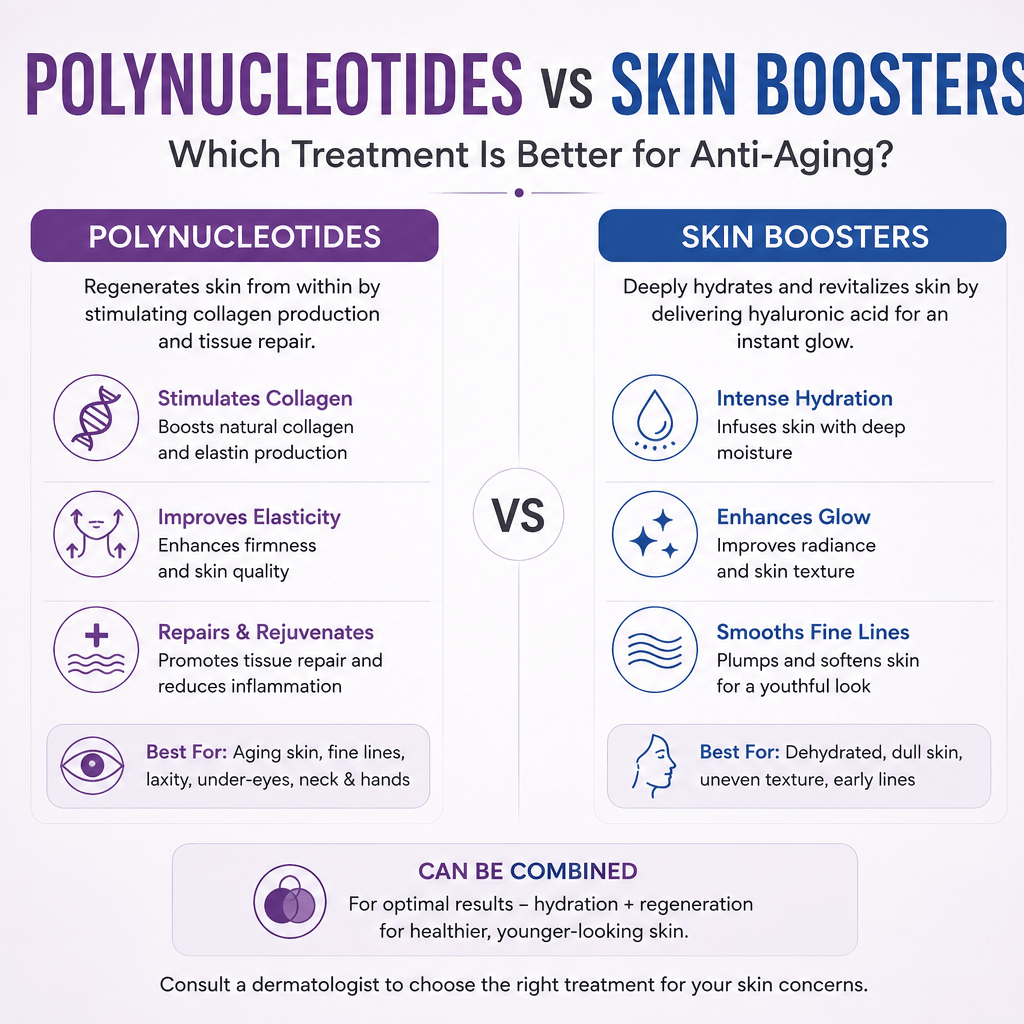
The pursuit of youthful, healthy, and radiant skin has evolved significantly over the past decade. Today, aesthetic medicine is moving beyond simply filling wrinkles or adding volume. The focus has shifted toward regenerative treatments that improve skin quality from within.
Among the most talked-about anti-aging treatments in 2026 are Polynucleotides and Skin Boosters. Both are injectable treatments designed to rejuvenate the skin, improve hydration, and restore a youthful glow. However, they work differently and are suited for different skin concerns.
If you’re considering an anti-aging treatment and wondering which option is right for you, this comprehensive guide will help you understand the differences between Polynucleotides and Skin Boosters, their benefits, ideal candidates, and expected results.
Understanding Skin Aging
Before comparing treatments, it’s important to understand why our skin ages.
As we grow older, our skin experiences:
- Loss of collagen and elastin
- Reduced hydration levels
- Slower cell turnover
- Thinning of the skin
- Increased pigmentation
- Fine lines and wrinkles
- Loss of firmness and elasticity
Environmental factors such as pollution, sun exposure, stress, poor sleep, and lifestyle habits further accelerate these changes.
Modern aesthetic dermatology aims not only to treat visible signs of aging but also to improve skin health at a cellular level.
What Are Polynucleotides?
Polynucleotides are advanced regenerative molecules derived from purified DNA fragments. These molecules stimulate tissue repair, enhance cell regeneration, and improve skin quality naturally.
Unlike traditional fillers, Polynucleotides do not add volume. Instead, they encourage the skin to repair itself from within.
How Polynucleotides Work
After injection, Polynucleotides:
- Stimulate fibroblast activity
- Boost collagen production
- Improve skin elasticity
- Promote tissue regeneration
- Reduce inflammation
- Increase hydration indirectly
- Enhance skin healing mechanisms
This makes them one of the most promising regenerative aesthetic treatments available today.
Benefits of Polynucleotide Treatment
1. Natural Skin Regeneration
Polynucleotides improve skin quality by activating the body’s natural healing response.
2. Increased Collagen Production
The treatment stimulates fibroblasts responsible for producing collagen and elastin.
3. Improved Skin Elasticity
Patients often notice firmer and tighter skin over time.
4. Reduction in Fine Lines
Wrinkles and crepey skin gradually improve as collagen levels increase.
5. Enhanced Skin Repair
Polynucleotides are particularly effective for damaged, aging, and sun-exposed skin.
6. Excellent for Delicate Areas
Popular treatment areas include:
- Under-eye region
- Neck
- Décolletage
- Hands
- Face
What Are Skin Boosters?
Skin Boosters are injectable treatments containing hyaluronic acid (HA), a naturally occurring substance that attracts and retains moisture in the skin.
Unlike dermal fillers, Skin Boosters do not create volume. Their primary goal is deep hydration and skin revitalization.
Common Skin Booster treatments include:
- Profhilo
- Restylane Skinboosters
- Volite
- Other HA-based injectables
How Skin Boosters Work
Skin Boosters deliver hyaluronic acid directly into the skin.
This results in:
- Improved hydration
- Enhanced glow
- Better skin texture
- Increased smoothness
- Reduction in dullness
Think of Skin Boosters as an intensive moisture therapy for the skin.
Benefits of Skin Boosters
1. Deep Hydration
Skin Boosters provide long-lasting hydration that topical skincare cannot achieve.
2. Improved Skin Texture
The skin becomes smoother, softer, and more radiant.
3. Enhanced Glow
Many patients notice a healthy, dewy appearance within weeks.
4. Reduction in Fine Lines
Hydrated skin appears plumper and younger.
5. Minimal Downtime
Most patients resume normal activities immediately after treatment.
Polynucleotides vs Skin Boosters: Key Differences
| Feature | Polynucleotides | Skin Boosters |
|---|---|---|
| Main Purpose | Skin regeneration | Skin hydration |
| Mechanism | Stimulates collagen production | Delivers hyaluronic acid |
| Best For | Aging skin, laxity, repair | Dehydrated, dull skin |
| Results | Long-term improvement | Immediate glow and hydration |
| Collagen Stimulation | High | Moderate |
| Skin Tightening | Significant | Mild |
| Under-Eye Rejuvenation | Excellent | Good |
| Treatment Goal | Repair and rejuvenation | Hydrate and refresh |
| Duration of Results | 6-12 months | 4-9 months |
Which Treatment Is Better for Anti-Aging?
The answer depends on your skin concerns.
Choose Polynucleotides If You Have:
- Early signs of aging
- Skin laxity
- Fine lines
- Wrinkles
- Sun damage
- Under-eye aging
- Thin, fragile skin
- Crepey skin on the neck
Polynucleotides address the root causes of aging by improving skin structure and stimulating collagen production.
Choose Skin Boosters If You Have:
- Dry skin
- Dehydrated skin
- Dull complexion
- Loss of radiance
- Mild fine lines
- Uneven texture
Skin Boosters provide rapid hydration and a visible glow.
Can Polynucleotides and Skin Boosters Be Combined?
Absolutely.
Many leading dermatologists now combine both treatments to achieve superior results.
The combination provides:
Immediate Benefits
- Improved hydration
- Better skin texture
- Enhanced glow
Long-Term Benefits
- Increased collagen production
- Skin tightening
- Improved elasticity
- Structural skin rejuvenation
This “treatment stacking” approach is becoming the gold standard in modern aesthetic dermatology.
Polynucleotides for Under-Eye Rejuvenation
One of the most exciting applications of Polynucleotides is under-eye rejuvenation.
The delicate skin around the eyes is often the first area to show signs of aging.
Polynucleotides help:
- Improve skin thickness
- Reduce crepiness
- Minimize fine lines
- Improve elasticity
- Enhance skin quality
Patients seeking a natural solution for tired-looking eyes often benefit significantly from this treatment.
What Happens During the Procedure?
Consultation
Your dermatologist evaluates:
- Skin condition
- Degree of aging
- Hydration levels
- Treatment goals
Treatment Session
The procedure typically takes 20-30 minutes.
Small injections are administered into targeted areas.
Recovery
Most patients experience:
- Mild redness
- Small bumps
- Minimal swelling
These effects generally resolve within 24-48 hours.
How Many Sessions Are Required?
Polynucleotides
Typically:
- 2-3 sessions
- 3-4 weeks apart
Maintenance every 6-12 months.
Skin Boosters
Typically:
- 2-3 sessions
- 4 weeks apart
Maintenance every 6 months.
Are These Treatments Safe?
Both Polynucleotides and Skin Boosters have excellent safety profiles when performed by a qualified dermatologist.
Possible temporary side effects include:
- Mild redness
- Swelling
- Bruising
- Tenderness
These usually resolve within a few days.
Who Is an Ideal Candidate?
You may be an ideal candidate if you:
- Are aged 25+
- Want natural anti-aging results
- Wish to improve skin quality
- Prefer non-surgical treatments
- Want healthier, more youthful skin
A personalized consultation helps determine the most suitable option.
The Future of Anti-Aging Is Regenerative
The aesthetic industry is increasingly moving toward regenerative medicine.
Rather than masking signs of aging, treatments such as Polynucleotides focus on restoring skin health and function.
Combined with Skin Boosters, these advanced injectables can deliver remarkable improvements in hydration, elasticity, texture, and overall skin quality.
Conclusion
Both Polynucleotides and Skin Boosters are highly effective anti-aging treatments, but they serve different purposes.
If your primary concern is hydration, radiance, and skin freshness, Skin Boosters may be the ideal choice.
If you’re looking for deeper rejuvenation, collagen stimulation, skin tightening, and long-term anti-aging benefits, Polynucleotides offer a more regenerative approach.
For many patients, the best results come from a customized combination of both treatments.
Consult an experienced dermatologist to determine which treatment aligns with your skin type, concerns, and aesthetic goals.
