

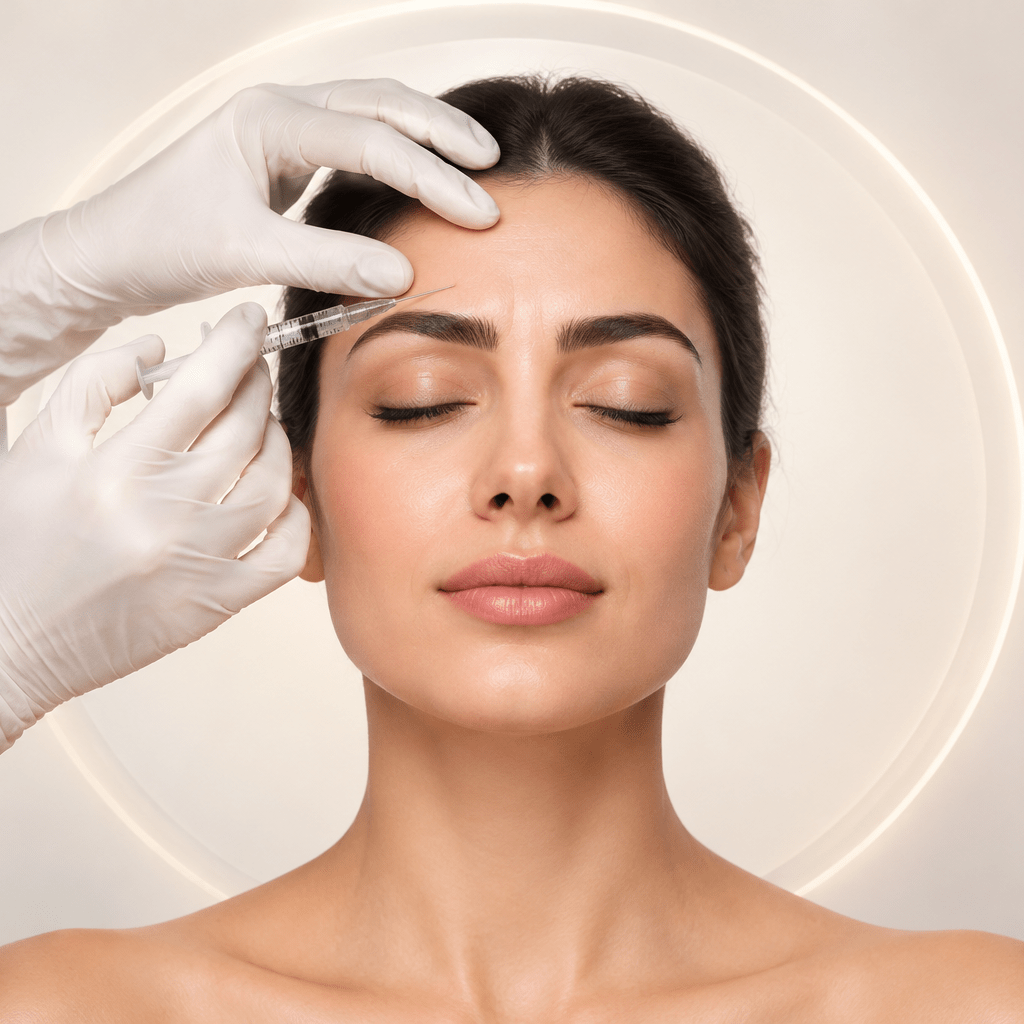
If you are considering Botox, you may have two very different questions in your mind:
“Is Botox actually safe?”
and
“Do I really need it?”
Both are important questions.
Botox, more precisely botulinum toxin, is a medical treatment that temporarily reduces the activity of specific muscles. When used cosmetically, it is commonly used to soften certain dynamic facial lines, including frown lines, forehead lines and crow’s feet.
But Botox is not something everyone needs, and getting a good result is not simply about injecting a certain number of units.
The right treatment starts with understanding your facial anatomy, your concerns and the result you want.
How does Botox actually work?
Some facial lines develop or become more noticeable because of repeated muscle movement.
When you smile, frown or raise your eyebrows, the underlying muscles contract. Over time, repeated movement can contribute to the appearance of dynamic lines.
Botulinum toxin works by temporarily reducing the activity of selected muscles. This can soften the appearance of certain expression-related lines while allowing other facial muscles to continue functioning.
The aim should not be to stop facial movement completely.
Can Botox look natural?
Yes, when it is appropriately planned and performed.
A natural result does not necessarily mean having no movement. In fact, the American Academy of Dermatology notes that dermatologists aim to relax targeted muscles while preserving natural facial expressions.
The amount and location of treatment matter.
Over-treatment can make the face appear less expressive, while an appropriately tailored treatment can soften lines without dramatically changing how you look.
How do I know if I actually need Botox?
You may not.
Botox should be considered based on your concerns and treatment goals, not simply your age.
You might consider a consultation if you are concerned about:
- Forehead lines
- Frown lines between the eyebrows
- Crow’s feet around the eyes
- Expression lines that are becoming more noticeable
- A desire for a subtle, refreshed appearance
But if your concern is primarily related to loss of facial volume, skin texture, pigmentation or sagging, Botox may not be the most appropriate treatment.
This is where an individual assessment becomes important.
Is Botox the same as dermal fillers?
No.
This is one of the most common misconceptions about aesthetic treatments.
Botox works primarily by temporarily reducing the activity of targeted muscles.
Dermal fillers, on the other hand, are injectable materials used to restore or add volume to areas of the face. Depending on the product and treatment area, fillers may be used to address volume loss, facial contours, lips or other concerns.
So the question is not necessarily “Botox or fillers—which is better?”
The better question is:
“What is causing the concern I want to improve?”
Is Botox safe for everyone?
No cosmetic procedure is appropriate for everyone.
Before treatment, your doctor should understand your medical history, medications, allergies, previous cosmetic treatments and the area you want treated.
Botulinum toxin injections should be performed by an appropriately qualified medical professional in an appropriate medical setting. The AAD specifically warns against receiving botulinum toxin injections in non-medical settings such as salons, parties or homes.
What are the possible side effects of Botox?
Most reported side effects are temporary and can include:
- Redness
- Swelling
- Tenderness
- Bruising
- Mild headache
In some cases, temporary weakness of a nearby muscle can occur, which may result in effects such as a temporarily drooping eyebrow or eyelid. Rare but serious effects can occur and require medical attention.
This is another reason why who performs the treatment matters.
How long does Botox last?
For cosmetic treatment of facial lines, the effects commonly last around 3–4 months, although this can vary between individuals and treatment areas.
Your doctor can advise you about an appropriate follow-up schedule based on how you respond to treatment.
What should you ask before getting Botox?
Before deciding, consider asking:
- What is causing the lines I want to treat?
- Is Botox actually the right treatment for me?
- What result should I realistically expect?
- Who will perform the injections?
- What are the possible risks?
- How much treatment is appropriate?
- Will the result affect my natural facial expressions?
The AAD similarly recommends asking about the practitioner’s experience and who will actually perform the injections.
So, do you really need Botox?
Not necessarily.
Botox can be an effective option for specific concerns, but good aesthetic medicine is not about treating every line or persuading everyone to have a procedure.
Sometimes Botox is appropriate. Sometimes another treatment is more suitable. And sometimes no procedure is the best decision.
The goal should be to understand what you want to improve and choose the least invasive option that can reasonably achieve that goal.
The bottom line
Is Botox safe? It can be when appropriately prescribed and administered by a qualified medical professional. But whether you need it is a separate question.
A good cosmetic consultation should focus on your facial anatomy, concerns, expectations and overall suitability—not simply on offering a procedure.
Natural-looking results begin with the right assessment, not with more treatment.
FAQ for Google & AI Search
Is Botox safe?
Botox is an established medical treatment, but like any medical procedure, it has potential risks and should be administered by an appropriately qualified professional.
Does Botox make your face look frozen?
It does not have to. Appropriate treatment can reduce targeted muscle activity while preserving natural facial expression.
At what age should you start Botox?
There is no single age at which everyone should start Botox. The decision should be based on individual concerns, facial anatomy, health and treatment goals.
How long does Botox last?
Cosmetic effects commonly last around 3–4 months, although this varies between individuals.
Is Botox better than fillers?
Neither is universally better. Botox and fillers address different concerns, so the appropriate treatment depends on what you want to improve.
